Download the demo and whislist on steam and epic games store

Prologue: The Storm-Lit Tower
It All Began Upon a Night of Storm
EVERNOTH NOVEL ENGLISH
Marcos Aguasanta
2/13/201818 min read
The Storm-Lit Tower
Wentworth and Baptiste
—I have often asked myself this question: why do I write? Perhaps I do so because writing allows me to alter what time has stolen and what circumstance decided to withhold. Perhaps I do so because, at my age, it may be the only thing I have left… To recover the sensation of control, the strength to offer resistance, the fortitude to swim against the tide. Or perhaps to mitigate the certainty that a quill shall be the last sword my decrepit body allows me to brandish. However, after having written for so many decades, I have come to question myself so deeply that I have the sensation of having lost myself in an endless quest.
»Why? What is it that prevents my heart from shuddering when the cruelty of life passes before my eyes? Why do I view life through a cynical prism? As if it were occurring in the distance and I were safe from its horrors. Other people’s misfortunes marvel and disturb me in equal measure. So too do the sordidness and the putrefaction that our passage through existence leaves in its wake. Have I already abandoned my humanity? Very often—far more often than I shall ever admit—I think that perhaps there is something dark within me, something terrifying bidding to get out. Every time I have those dreams where I find myself suspended in that vile black mass, that possibility becomes more certain. However, when I manage to break free from it and begin to vomit up that dark treacle, I realise that the evil had already seeped into me long before I could do anything to prevent it.
»Everything is a mirage. A fact, once lived, abandons its tangible nature to become a memory; and both fantasies and facts turn into memories. Who dares to affirm that they possess the certainty of what reality is? Who believes they can know what fantasy is, or what purpose it serves? When I climb that tower and the clouds swirl around this volcano and the lightning stalks this treacherous forest, who dares tell me there is no power in what we do? You are determined to deny me the evidence, and I do not blame you; I know you are protecting me from myself. But that protection is denying me my own nature. Perhaps things should follow their course and that process of inevitable self-destruction should unfold until it finally finishes me… you are merely prolonging my suffering.
—Wentworth, you are rambling. You really ought to compose yourself —advised Baptiste, raising his eyes above a steaming cup of tea—. You know that inspiration cannot be forced; we must let our experiences fill the reservoirs of our imagination so that it may flow. Turning it over in your mind will only serve to frustrate you; you should leave it be for a few days. You shall see how you return to the fray with renewed strength, and with the muses waiting for you.
—I do not intend to stop. Aldrich is alone in Evernoth. What will become of him all that time? The poor boy suffers so whenever he finds himself alone there. The world surrounding him sleeps in a stony slumber while he contemplates it, and I have no strength left. Since Rose left, it is all over.
—Wentworth, we have already discussed this. Aldrich is merely the character of a tale. He does not exist. And Rose has nothing to do with your novels; she stripped you of nothing. You cannot hold her responsible for your lack of inspiration. She needed to have a life of her own, far from the walls of this manor, which resembles a casket more than a home.
—How dare you say such a thing?! —screamed Wentworth, suddenly beside himself—. I thought I could trust you… —he said, his eyes bulging—. I told you! He doesn’t like me… —he began to babble in a voice that was suddenly high-pitched—. He doesn’t like me! —he screamed again—. He hates me, he has always hated me. He is jealous…
Baptiste approached Wentworth, resolute.
—It is quite alright, Wentworth. Look me in the eyes —he said, leaning in, trying to take his hand to establish a bond of trust between them, for he did not wish him to become even more agitated.
—No! Let me be, you only want me to go away —he repeated, mimicking the voice of a child—. You always want me to go away, you don’t want Wentworth to come with me anymore. He only wants to go to Evernoth with me and you won’t let him.
—Come now, Wentworth! Pull yourself together, listen to me!
—I don’t want to! —he screamed in his face, in a tantrum.
—You think we are mad, and it is not so; it is you who can no longer remember. He doesn’t love us. I am sure he was glad the day I disappeared. You are to blame for Rose not wanting to come home.
Then, his voice changed suddenly, returning to normality.
—Do not worry, I know you are here. It matters not what the others think, we know the truth —Baptiste continued holding his face, trying to bring him round, scrutinising the deepest depths of Wentworth’s wandering gaze.
—Baptiste loves you too —affirmed Wentworth, his gaze lost within himself—. Very soon we shall all go to Evernoth again, as soon as Rose returns. Is that not so, Baptiste? Tell Aldrich that you are waiting anxiously for Rose to return and that, when she does, we shall return to Evernoth.
Baptiste took a deep breath. He knew he had to play along, for contradicting him could only bring trouble.
—Of course. Everything will be as it was before, like when we were children, and we shall ride the winds with alacrity, gathering lightning from the clouds to exchange it for feral tears. We shall see Lin again, and Merle; we shall explore the treasures of the humid forest, and hear the Flamigers intone their songs in the purple desert.
Wentworth began to smile like a dreaming child, imagining all those meetings and places. But something darkened his gaze once more.
—Nobody believes us, Baptiste. When we explain it to people, they do not believe us, not even you. Why do you say such ugly things? Why do you tell Wentworth that I do not exist?
Baptiste remained absorbed, caressing his cheek, crouching at his feet, with the certainty that this contact would prevent him from abandoning himself to madness.
—Aldrich, every time you appear you hurt him, you do him great, great harm. Wentworth is no longer capable of going with you to Evernoth; he has no strength left.
At those words, Wentworth shrugged his shoulders, remorseful, like a child who has been scolded. An instant later, he returned to his brooding and, with a vacant stare, continued his speech. Suddenly, that child who was bidding to gain control over his mind disappeared.
The two remained in silence while the fire in that bicentennial fireplace crackled. Baptiste remained crouching before him, lavishing him with repeated caresses, until Wentworth rested his head on his lap, surrendered. Then, Wentworth proceeded with his soliloquy.
—As I grew, my dreams blackened, and little by little they ceased to be those comforting escapes to places where I could forget, becoming instead ruinous places inhabited only by melancholy. Reality turned them into black waters, into the shelter of my deepest fears. How treacherous the mind is! How confusing reality…
Baptiste shed a pair of tears onto his lap. Wentworth began to stroke his Afro hair.
'Wentworth is worse every day,' thought Baptiste. Lately, he leapt from his reveries to those bouts of madness so often that he was unable to remember the last time they had held a real conversation. He seemed lost in his mind, drowned in his writings, rambling about the loss of his memories and about a twin brother he had never had.
—It comes undone between your fingers and nothing remains of it but diffuse glimmers in the distance. Those illusions that sparkle with the candour of a good memory are unattainable to me today; they availed themselves of my vanity and, in alliance with fortune, they tore my soul apart. They filled my heart with colourful yearnings from which sprouted grey disappointments.
There was no longer any trace of that fit of rage. Now Wentworth was lost in thought, absorbed in his own memories. Baptiste was able to breathe easily; he did not want to have to sedate him, for they expected great news that day and he wanted to be able to share it with him.
—How are you feeling? Would you like a little more tea? —Baptiste asked him, getting up to fetch the ceramic teapot that sat on the small table. The light of the early dusk illuminated the room in which Baptiste and Wentworth battled the cold of a snowy February afternoon.
—Ah, yes… Yes, of course —he replied, abandoning that trance-like state—. That will help me relax. Those landscapes stripped me of the last remnants of my battered innocence, my only treasure. They stole my brother, and with him, happiness vanished… My happiness, my mother’s, my father’s… And yours.
Wentworth fell silent for a few seconds, looking Baptiste in the eye. A mixture of melancholy and disappointment made a pair of timid tears spring from that blue gaze. He had seen the slight reddening of Baptiste’s eyes as he poured the tea into a porcelain cup. Wentworth felt disappointed, a burden to Baptiste. He had the certainty that he could never repay him with the love his devotion deserved. He felt disappointed for having squandered the opportunity to do so in the past, for having neglected what, after all, was the only and most valuable thing he possessed. The person who brought order and gave meaning to the unbridled manner in which he had lived his life and the atrocious consequences it had brought him.
—I know that being with me is difficult… Surely unbearable. I do not know how you still have the strength. You lost me that day. The day Aldrich left, I lost everything. That day I began to write, clinging to that lost world, to that idea of happiness, and it has consumed me from the inside. I wanted to give Aldrich a world, I wanted to create a place where Aldrich could be happy, but even he has changed. I am incapable of bringing that innocence back and his soul has blackened, just as mine did. But if I lost him, it was my fault: I exposed him to the same poison that envenoms my soul... Here I remain, every afternoon the same, every afternoon seeking ways to reconstruct that old world. A world that was once a reality and today is nothing but ruins. The tattered desire to revive the adventures that perished with my childhood.
—Do you wish to go up to the tower now?
—Yes, please —said Wentworth in a breath.
Baptiste handed him the cup of tea.
—You need me to accompany you; you are somewhat agitated today.
—No —said Wentworth harshly.
Baptiste reacted instantly with a contained gesture that he could not anticipate, the kind of gesture only Wentworth knew.
—No… I prefer that you do not. Lately, I am unable to do justice to the beautiful melodies you compose for me —Wentworth affirmed, worried that his refusal might sound like a rejection.
As he pronounced those words, something between his stomach and his chest shuddered: the certainty of his failure, of all his failures, piled up alongside his feelings, for he had realised how he had wasted his entire life and burdened the lives of all those who had crossed his path. Baptiste was always there for him; he had abandoned his music to be permanently with him, even though the malady that afflicted Wentworth made him very dangerous.
—I am so fortunate to have you in my life —said Wentworth with reddened eyes, on the verge of spilling a couple of tears onto his cheeks—. You have always been there, giving me support. You are the strongest and most tenacious person I have ever known.
Baptiste let him speak, waiting for the opportune moment to intervene and try to steer the topic of conversation to a more cheerful one. He was accustomed to these ups and downs. Those periods of alienation were common in someone with his illness, but Baptiste simply limited himself to listening to him, to letting him unburden himself. In some way, he was glad for the loquacity with which he constructed his speech. The deterioration had not led him to lose his faculties of language, and that was a relief, for the worst moments came when he had the sensation of not being able to write. The anguish and despair that seized him were far worse than the psychotic episodes.
Wentworth was sitting before the fireplace, dressed elegantly, trying to move a large body that in another era had been a source of pride to him. Baptiste admired his beauty and the regal bearing that distinguished him. However, he had seen how the years had taken their toll, turning him into little more than the rubble of what he once was.
Baptiste harboured a good handful of disquieting thoughts within him that gnawed at his insides and, despite the calm with which he presented himself, behind that gaze there was an unusual restlessness, a restlessness Wentworth noticed. These worries swirled in his mind as he observed Wentworth rising from the sofa. This led him to make a decision.
He had seen Wentworth grow up, and from very early in their friendship, he had felt something more than fraternal affection. He could see an attraction in him beyond simple affinity, even when he had discovered his most terrible flaws. In Baptiste’s gaze, there had always been a certain admiration; but, above all, desire. He had seen him evolve, grow, mature, and plummet into decrepitude.
Eighty-three years they had lived together. Eighty-three years they had loved each other. Eighty-three years together that had vanished like smoke.
For Baptiste, there was no colder way to quantify love and sacrifice than in a number; he felt it was akin to reducing all those moments of joy and sadness, of sacrifice and cohabitation, to a ridiculous formula, to a simple sum of years. To his understanding, a number was incapable of evoking all that; rather, it stripped it of importance with its mere suppressive intention, for there was nothing that could represent or describe the great love those years together represented.
The nuances of his love, the small details, and the Baroque complexity with which he lived those feelings… The storm of wanting was his oxygen and, although he would never admit it to anyone, he had discovered that he loved those constant conflicts to which Wentworth had exposed him throughout his life. Even knowing it was wrong, those sacrifices were the sincerest form of demonstrating his love.
For Wentworth, rising from the sofa had become a titanic effort. That pitiful scene returned him to the past when the two were young, to the era in which he and Baptiste shared motivations as well as vigour and beliefs. The era in which the two felt blissful to have one another, and not only for the reasons old age provides after seeing your world disappear, but for the consciousness of everything they shared with one another.
Friends? Comrades? Lovers? Life partners... that was the term, their term. However, in those moments, Wentworth only wished to see in Baptiste that pride once more, that desire that had now turned into constant worry, and that fear that accompanied him since he had lost the strength to fight. Baptiste’s happiness was something that filled him, though he had often forgotten it in pursuit of reveries and melancholies of a time pretended to be better.
In that teetering instant on a centennial green velvet sofa, Wentworth feared he would never again see that broad smile and that chest puffed out with pride for him. Now he could only see a brow slightly furrowed with worry and the latent anguish Baptiste tried to conceal. Emotions that grew as Wentworth became withered and faded.
But old age knows nothing of pride, vanity, or indolence. The battle was lost; Baptiste knew it, Wentworth too. Despite this, Baptiste would only aid Wentworth in his stumbling the moment it became inevitable.
Baptiste leapt up, running to support him upon seeing him stumble.
—There was no need for you to help me, Baptiste. I could manage…
—I prefer to be cautious than to have you bedridden and incapacitated. You are the worst patient in the world, and I indulge enough of your whims as it is without having you prostrate in bed. I do not wish to be obliged to indulge you even more —he told him, helping him to stand.
—That is your job, to indulge me —Wentworth told him solemnly, with a rehearsed, haughty look.
—Oh, is it? That is my job? Well, take care, lest I decide that my job is to push you down the stairs —he retorted with an incisive tone.
—Never! —Wentworth exclaimed dramatically—. That would not be like you. Such a violent death… —he dragged out the last word—. I do not know; I think for you it would be easier to poison, or order a killing, perhaps. But pushing down some stairs? I see it as too notorious, very dramatic, and… look, do not misunderstand me! You have your theatrical touch, but it is subtler; you entice with the arts of silence. That is what makes us complement each other so well. I have always been somewhat more expansive…
—Extravagant, I would say —interrupted Baptiste.
—Well, my dear Baptiste, it shall not be I who pits our capacities for extravagance against one another. However, I must remind you that you were born and raised in a country where people like you were exhibited in the zoo until 1960.
—Yes, the ignorance of your people is overwhelming.
—Of that, there is no doubt, but if you will allow me to continue… as the person who enjoys the privilege and the misfortune of being the one who knows you best in this damned world, I tell you that something so strident does not suit your style… Perhaps drowning me in the bathtub? Hmm, although you do not like to get wet without necessity. However, your pride would not permit another person to be the one to sever a life whose end was dictated by your will. Ah! I do not know… I find it difficult to find that dramatic, paradoxical death, likely full of symbolism, with which you would put an end to my days. But I conclude, without giving an answer to the previously raised hypotheses, by telling you that throwing me down the stairs would not be the method you would utilise to kill me.
Having said this, Wentworth grabbed his cane and walked away.
—Where are you going? —asked Baptiste, hoping that interminable speech would finally end.
—I am leaving…
—I trust you are satisfied with that answer. I feel my curiosity completely sated —said Baptiste with an ironic and accusing expression.
—It is going on six.
At that precise moment, the bells of the Keep began to ring. Baptiste’s heart shrank a little: the hour had arrived, the fateful hour in which day and night merge. In that moment, Baptiste felt the horde of sensations overwhelming him. However, there was little he could do, for the moment had arrived.
—Our grandson is about to be born… —Baptiste warned him—. On your birthday.
—Yes. Another child who will be born lifeless.
—It need not be so…
—You know it will be so. You know it has to be so.
Baptiste looked at him with suspicion, but changing the subject, he said:
—Wait, I shall accompany you.
—How? Why?
—Wentworth, you are weak. Drop that stupid pride. You do not have to pretend, not with me… Besides, I like helping you. And I have a desire to play the piano.
—Well, it is just that I do not want to get nervous. I have sat before the blank book for weeks and I cannot manage to write anything worthwhile. When I manage to submerge myself in Evernoth, I only get to see ruins and ash, nothing of the peaceful world we created together.
—Wentworth, you are very weak. You promised me you would not return to Evernoth until you recovered your strength.
—What does it matter now, Baptiste? I have no strength left to continue, and we have no heir to whom to leave our legacy. Let me enjoy the time I have left.
Baptiste fell silent.
—Besides, I told you: I can no longer even find inspiration for anything.
They arrived at the library after traversing dozens of corridors. There awaited a room in the centre of which stood a grand piano, the piano where Baptiste would sit to play while Wentworth was guided by his inspiring music. It guided him towards marvellous worlds, the marvellous worlds Wentworth was meant to share with him and which Baptiste had ceased to visit, jealous of Wentworth’s inability to detach himself from them. But Wentworth was happy that way and, for Baptiste, a smile from Wentworth was worth more than the uncomfortable certainty of knowing that, try as he might, he was always going to be in second place, just after Evernoth. Just after the traumas of his childhood, which made him obsess over that dream world.
A pile of books rested on the grand piano; at Wentworth’s desk, located a few metres away, there was ink, a quill, crumpled papers, and a few volumes of ancient books they had studied together for decades in search of answers. In the centre of the room, a book the size of a codex, open in the middle with blank pages, waited for Wentworth to brandish his quill over it and let the rivers of ink flow. The book was of red leather with metal-reinforced edges. On the cover, an engraving shone in gold, in which the name "Evernoth" was written.
Baptiste helped Wentworth to sit…
—If he is born tomorrow, the boy will share your birthday. I know you do not like being spoken to about your birthday, but... well, if it is so…
—What are you going to play for me today? —replied Wentworth, avoiding Baptiste’s words.
—The song "Dawn’s Light" —he replied.
—The song of beginnings… I do not intend to repeat it to you, but I cannot get it out of your head either: stop thinking about that child as if he were not destined to die before seeing the light of the sun.
This time it was Baptiste who ignored Wentworth’s words.
—I am playing it because tomorrow is your birthday, and this was the first song I composed for you.
—Yes, I remember. Among all those orphans, my mother fell in love with you for your music. Who would have told my mother that it was precisely you who should have inherited all this? My bigoted father was furious when she took you in as his ward and would not allow him to order you about as if you were one of the servants.
—Your father was American, and that is how they behaved there in those times.
The two remained silent for a few seconds. Baptiste gathered stacks of papers that covered the entire piano and Wentworth rummaged amongst his books.
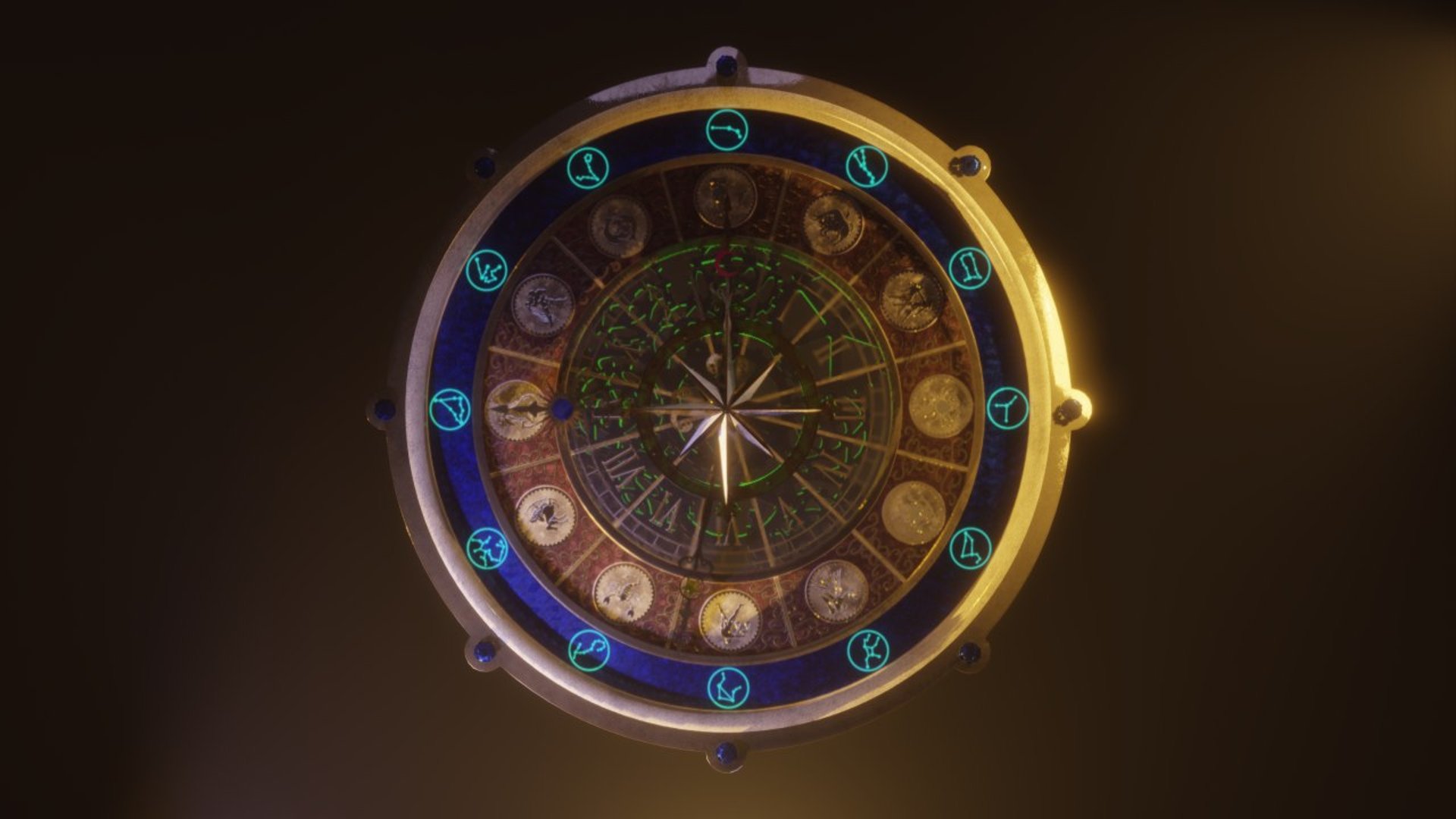
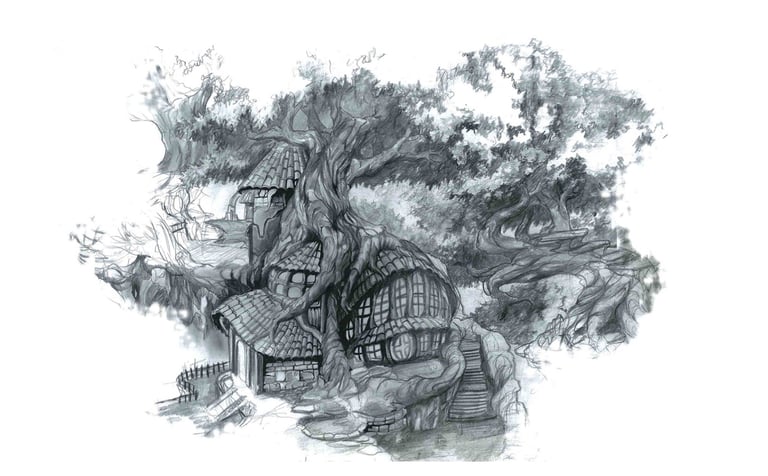
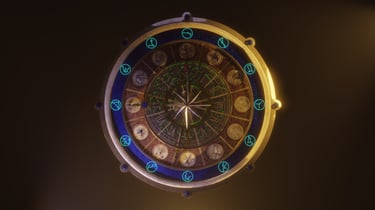
The library of Crowley Manor was immense and held so many books that two or three entire lifetimes would be needed to read them all. That was one of the favourite corners for both of them, a place that distilled magic: a library built in what had formerly been the mission chapel, an old Gothic church around which that great manor had been constructed. The piano and Wentworth’s desk were positioned before the altar, above which now shone an enormous rose window, a sort of mandala divided into three concentric circles formed by twelve circles, one beside the other.
—You know? That song has always been fascinating to me. It was the first seal you created. When you told me how it worked, it seemed a fascinatingly creative way to create a seal.
—Yes, an image locks itself in your subconscious and takes root. The music makes it grow.
—Truly, you are the visionary. A pity you are so afraid to give free rein to your gifts.
—I am only afraid of losing you…
—Baptiste, he will not be born alive. If I could make it otherwise, I would, but it is not in my hand nor in yours.
Baptiste grazed his shoulder and leaned in, lifting Wentworth’s chin; he approached to give him a kiss on the lips. Wentworth noticed Baptiste’s full lips and for an instant felt it as a farewell, like a kiss given to the cold corpse of a beloved about to be deposited in the bowels of the earth.
Upon seeing Baptiste’s intense green eyes, Wentworth could see the redness and the crystalline reflection of tears accumulating on his lower eyelids. Baptiste gave no room for Wentworth’s more than evident perplexity and left him wondering what he was missing, what that sudden outburst of emotionality was owed to. The option that had crossed his mind was so absurd he would not even give it credit by naming it.
Baptiste intoned the melody to perfection: it was a piano piece that began light and cheerful, a song inspired by their friendship and their childhood together. The same song he had played so many times that Wentworth could recognise it note by note. A song that had inspired the best of his works. One of so many tokens of all the good they had lived together.
The song began with a light and beautiful ostinato; then followed two voices that seemed to chase each other playfully, imitating one another joyfully with the cadence of a bird’s warbling. As it advanced, the piece gained complexity: the high and tinkling tones of the ostinato turned into grave and melancholic tones. In the last stanza, he intoned the same ostinato in a grave and resounding tone while the two voices continued chasing each other, ever fainter, losing themselves in the distance, until in the end both the ostinato and the two voices disappeared.
Wentworth’s mind went blank for a few moments. He closed his eyes and began to visualise the library in his thoughts, where he archived the images that transported him to those placid and marvellous places. For the first time in weeks, he found inspiration; he saw himself capable of entering Evernoth. Then, he prepared to write.
Outside that room, the thunder began to sound, as happened every time Wentworth prepared to write. An event that many found fortuitous and that others utilised to feed twisted urban legends and macabre stories about the inhabitants of Crowley Manor and its surroundings. Not exempt from suspicious events, the residents also recounted a good handful of paranormal tales that horrified and fascinated them at once.
At eight in the evening on the twelfth of February, 1991, Rose Crowley began to feel discomfort, a sharp and stabbing pain in her belly. That was the sign: it was coming. This was the fourth attempt; her three previous babies had been born lifeless, as if at the moment of passing to form part of this world someone had stolen their vital breath, for, without apparent reason, they were born dead even when, before leaving her womb, they seemed perfectly healthy.
Rose had completely lost hope this time. Had it not been for the support of Dan, her husband, and of her father, Baptiste, she would never have lent herself to becoming pregnant again.